
Dental Implant Failure & Salvage – Fort Worth, TX
Giving Your Restored Smile Another Chance
At the end of the day, dental implants are truly a consistently effective treatment with an impressive success rate of over 95%. However, in rare cases, dental implant failure is a possibility. But you don’t have to live in fear—should this happen to your rebuilt smile, our team is more than ready to help. We offer dental implant failure and salvage services to get your smile back on track and ensure you have a functional, healthy tooth replacement for life. If you’re noticing any issues with one or more of your dental implants, don’t wait to contact our Fort Worth dental office for assistance.
Why Do Dental Implants Fail?
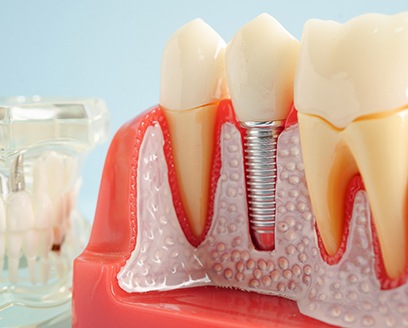
The most common cause of dental implant failure is a condition called peri-implantitis. This bacterial infection causes the tissue surrounding the dental implants to become damaged and deteriorated, to the point where the main support for the posts is entirely lost over time. It’s most often attributed to poor oral hygiene, but many other factors play a part, too, including:
- Failed osseointegration, which is the process by which your implant post fuses with your bone tissue
- Physical trauma that disrupts the implant post’s position in the jaw
- Medical conditions that interfere with the body’s ability to heal or support dental implants, such as cancer or other diseases
Symptoms of Failed Dental Implants
Dental implant failure in Fort Worth can typically be divided into two main types: early failure and late failure. Early failure happens shortly after the implant placement surgery, while late failure occurs anytime following osseointegration. It might even be years or decades after the initial surgery!
That said, some symptoms of early and late dental implant failure (which tend to be similar) include:
- Unusual or severe pain around the dental implant site. Once your implants have healed, they should feel comfortable and natural inside your mouth.
- Looseness in your implant. In some cases, this is just an issue with the attached restoration; however, if the post is loose, the implant might be in danger of being lost.
- Bleeding, swelling, and pus near the implant site. These are all signs of a possible infection.
- Difficulty chewing or moving your mouth. Once your implants have been placed and healed, you should be able to eat virtually all types of foods with ease.
How Dental Implant Salvage Works
If you notice any signs that something may be wrong with one of your dental implants, don't wait to reach out to our office. We'll take a close look at your mouth, ask about the symptoms you've been experiencing, and walk you through your options for treatment. In many cases, conservative measures like a deep cleaning, antibiotics, or other infection-control steps are enough to save the implant.
When the implant or the tissue around it has sustained more serious damage, removing the implant may become necessary. From there, we can work on rebuilding your oral health through treatments such as bone grafting or gum disease therapy, which may open the door for a new implant in the future.